

Lead With Your Mask
The myth of the authentic leader, the psychology of performance, and what your team actually needs from you.

They say that authentic leadership is the gold standard.
If not the gold standard, then one of them.
Be yourself.
Be fully present.
Let your people see you.
It’s a beautiful idea. And it seems logical.
What we overlook is how it destroys leaders.
The Unspoken Rule
There is something we avoid saying openly about leadership, even though the evidence is all around us and, of course, it is in a way obvious.
A leader who crumbles in the midst of a crisis does not inspire. They terrify. The CEO who shares their existential doubts at the general meeting does not gain trust. They lose it. The entrepreneur who lets her investors see the panic beneath the presentation does not seem approachable. She seems unreliable.
We have confused psychological safety with operational vulnerability. They are not the same thing. Research on authentic leadership itself knows this, even if it doesn’t always state it clearly.
The most widely accepted definition of authentic leadership, developed by Walumbwa and colleagues in 2008, defines “relational transparency” not as complete emotional disclosure, but as relative transparency in the expression of genuine emotions, while simultaneously regulating them to minimize displays that might be “inappropriate or potentially damaging”1.
The word “minimize” does a tremendous job. Because, from the outset of the theory, the authentic leader is already a performer who has learned which emotions to bring along and which to leave at the door.
And this is entirely functional.
The Necessary Show
Imagine an introverted dean.
By nature, she is a woman of thought. She prefers the quiet of a library to the noise of a fundraising dinner. Social interaction exhausts her. Crowds tire her. Her display of enthusiasm seems foreign and, at the very least, insincere.
But her foundation needs money. Her school needs resources. Her students need buildings, scholarships, opportunities.
So she walks into room after room of donors, and plays her part. Not her true self. Something else.
Something the situation demands. She speaks with a confidence she doesn’t feel. She projects an energy she doesn’t possess. She shakes hands, laughs, tells stories, follows up, and starts the “same show” all over again the next morning.
And the institution survives.
Researchers who interviewed practicing leaders directly found something illuminating. Iszatt-White and colleagues (2021) documented leaders routinely describing “knocking off some of the rough corners” of what they actually feel, and “modeling emotion more expressively” for effect, while still experiencing themselves as fully authentic.2
The researchers called this “authentic inauthenticity,” and the leaders they studied showed no tension about it, because they understood something the authenticity industry does not want to admit: being authentic is not shooting from the hip.
The Burden of the Mask
Now consider something more difficult.
A CEO is sick. Seriously sick. The kind of sick that makes you think about funerals. His leadership team knows something is wrong, but they don’t know exactly what. The company is at a critical crossroads. Decisions need to be made, and trust must remain intact.
He walks into the meeting and decides not to share the burden he’s been carrying for months. So, instead of saying “I’m exhausted and scared, and I don’t even want to think about how this is going to end,”, he plays his part. At full intensity. His analysis is sharp. The direction he sets is clear. The energy in the room shifts from his illness to the potential they have as a business.
Is this suppression? I don’t think so.
It is something more precise and more demanding.
In a study published in Frontiers in Psychology3, Torrence and Connelly (2019) asked 212 undergraduates to adopt the role of a leader and respond to vignettes involving ethical decisions, delivering negative feedback, and high-stakes situations. They measured four emotion regulation tendencies and related them to performance on these leadership tasks.
Cognitive reappraisal and situation modification were positively associated with leadership performance. Expressive suppression was negatively associated. Those who changed how they interpreted the situation - rather than simply suppressing their emotional display - performed better on emotionally charged leadership decisions.
Performance is not a lie.
It is an interpretation.
The Transparency Trap
Here is where someone says: the new generation demands transparency. Followers want authentic leaders.
This is partly true and almost entirely misunderstood.
Research by Jiang and colleagues4 found that what followers actually respond to is not the volume of emotional disclosure but the inference that the leader is not performing for effect. When leaders voluntarily revealed a specific weakness or past failure—not a general emotional state, but something concrete—followers rated them as significantly more authentic than leaders who revealed nothing.
The mechanism: followers infer that “if you were managing impressions, you wouldn’t admit this.” One carefully chosen vulnerability, revealed at the right moment, comes across as honesty. But this is selective disclosure, not emotional transparency.
There is a second boundary.
And it does not come from Jiang.
Research on emotional regulation and emotional labor in leadership is consistent on this point: followers want access to the leader’s emotional reality—enough to infer motive and feel included. They do not want unfiltered access. Raw panic, uncontained grief, visible despair—especially in a crisis—and the very followers who value authenticity begin to interpret it as instability or incompetence.
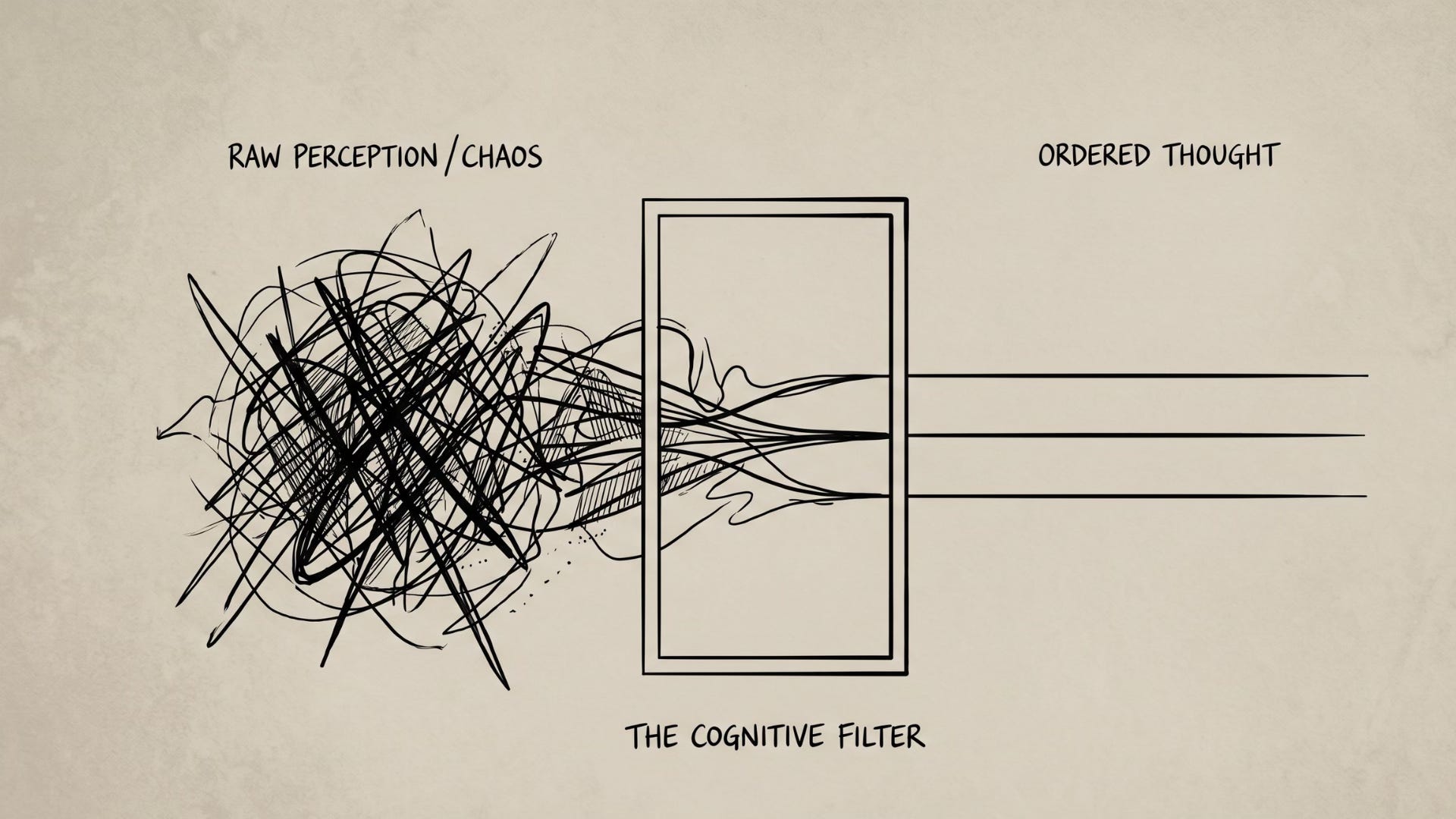
Authentic leadership, by its very definition, assumes a filter.
Someone else might say: if I wear a mask, I’ll lose my very soul.
Well, the mask is not the absence of a soul. It is a form of professional craft. The surgeon who remains calm during a crisis has not abandoned her emotions. She has shifted, cognitively, how she relates to them. The emotion is present. What changes is its interpretation into expression and action.
The Art of Regulation
The entrepreneur who buries her panic to project invincibility to her investors is not lying.
She is making a judgment about what belongs in the room. Her panic is real. Her fear is real. But neither is the most useful thing she can offer in that moment.
A 2022 study in Frontiers in Psychology5 followed 362 employees and their leaders. Leaders who regulated and expressed their emotions in ways that shaped how their teams felt were associated with significantly better subordinate performance. The mechanism was emotional contagion. The leader’s managed emotional display shifts the affective state of the team. The team follows.
Put Torrence and Connelly next to that, and the picture that emerges is not a binary. Performance peaks in the middle. Between unfiltered emotional discharge and rigid suppression. In the zone of strategic, regulated expression.
The leader who vents freely destabilizes the people who need her to hold the room. The leader who suppresses pays a cognitive cost that surfaces in the quality of her decisions. The leader who regulates - who processes the emotion, reframes it, and then expresses a calibrated version of it - does the work that leadership actually requires.
This is not a personality trait.
It is a practice.
A rehearsal.
A daily decision about who you will be before you walk through the door.
The Demand of the Room
We have built a cult of authenticity that confuses the leader’s inner world with what the people around her need.
Your team does not need your true self. They need the self the situation calls for.
Your investors do not need your panic. They need the performance of a person who has already thought past the panic.
Your people do not need your exhaustion. They need the leader who walked through the exhaustion and came out the other side.
The most powerful leaders are not the most authentic ones. They are the ones who have understood that leadership is a sustained act of regulated performance in service of something larger than their own emotional comfort.
In other words:
You do not lead with your feelings.
You lead with your mask.
.
.
Until next time,
K.
For twenty years I have watched intelligent people understand everything and change almost nothing. Understanding alone is not enough. It needs something that forces you to look directly at what you already know is there.
That is why I built The Black Box: A 30-day protocol for radical truth. One question per day. No exit
References
Walumbwa, F. O., Avolio, B. J., Gardner, W. L., Wernsing, T. S., & Peterson, S. J. (2008). Authentic leadership: Development and validation of a theory-based measure. Journal of Management, 34(1), 89–126.
Iszatt-White, M., Whittle, A., & Sawney, A. (2021). Authentic leadership and emotional labour: A critical examination. Leadership, 17(3), 281–298.
Torrence, B. S., & Connelly, S. (2019). Emotion regulation tendencies and leadership performance: An examination of cognitive and behavioral regulation strategies. Frontiers in Psychology, 10, 1486. https://doi.org/10.3389/fpsyg.2019.01486
Jiang, L., John, L. K., Boghrati, R., & Kouchaki, M. (2022). Fostering perceptions of authenticity via sensitive self-disclosure. Journal of Experimental Psychology: Applied, 28(4), 898–915. https://doi.org/10.1037/xap0000453
Wan, M., & Pan, W. (2022). The impact of emotional leadership on subordinates’ job performance: Mediation of positive emotions and moderation of susceptibility to positive emotions. Frontiers in Psychology, 13, 917287. https://doi.org/10.3389/fpsyg.2022.917287